Imagine cruising down the highway on a beautiful afternoon when a sudden, unfamiliar clunking sound echoes from under the hood. A second later, a mysterious amber light pops up on your dashboard. It is a moment every driver dreads, accompanied by an immediate sinking feeling.
Modern vehicles are engineering marvels designed to cushion us from mechanical wear and tear. However, this seamless engineering often makes drivers complacent. It is easy to dismiss a minor steering vibration, a faint burning odor, or a slow window crack as something that can wait.
Delaying a minor fix is a financial gamble. What starts as a simple adjustment can quickly transform into a catastrophic mechanical failure, leaving you stranded with a massive repair bill. Your vehicle is constantly communicating its health status. Recognizing the early red flags preserves your safety on the road and protects your bank account. This guide details the critical warning signs that require urgent care, offering actionable tips to diagnose issues before they escalate into an automotive emergency.
1. The Dashboard Warning Lights Are Flashing or Changing Colors
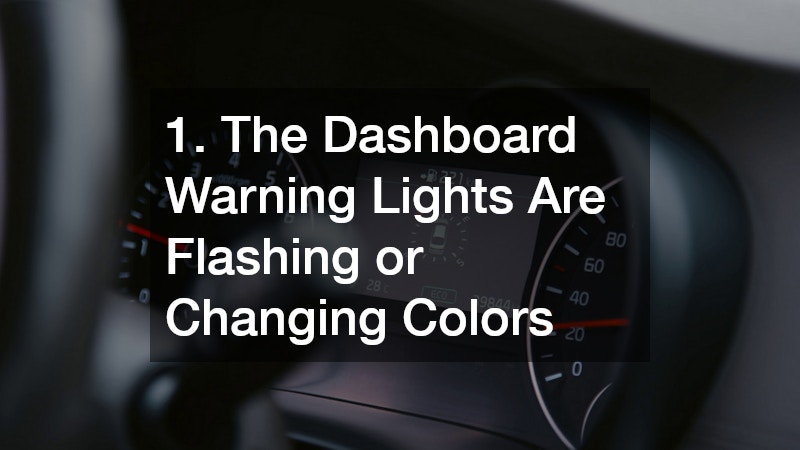
Your dashboard is your vehicle’s primary communication hub. While a solid warning light indicates that a system requires attention relatively soon, a flashing light is an explicit, immediate cry for help. Ignoring a blinking indicator can lead to total engine destruction within miles.
Actionable Tips for Drivers:
-
Decode the light behavior immediately: If the check engine light is steady, you can typically drive to a service center. If it begins to flash rapidly, pull over safely, turn off the ignition, and arrange for a tow.
-
Watch the color coding: Treat dashboard lights like traffic signals. Green or blue means a system is active. Yellow or orange means a component needs to be checked soon. Red or flashing means stop driving immediately.
When internal gear components begin to slip or fail, the vehicle’s onboard computer throws specific codes to protect the powertrain. If you notice your engine revving high but the vehicle failing to accelerate, or if the car hesitates aggressively when shifting, internal components are likely failing. Seeking out local auto repairs at the first sign of an erratic dashboard light or shifting issue prevents minor electrical glitches from cascading into full mechanical failures. Catching a fluid leak or a faulty solenoid early can save you from the immense financial burden of a complete transmission rebuild, keeping your vehicle safely on the road.
2. The Steering Wheel Pulls Maliciously or Brakes Feel Spongy
Your brakes and steering are your primary lifelines on the road. When either of these systems begins to deviate from normal behavior, your safety margin drops to zero. A car that refuses to track straight demands immediate intervention.
Actionable Tips for Drivers:
-
Perform the hands-off coast test: Find a flat, empty, and safe parking lot. Drive forward at a low speed and gently loosen your grip on the steering wheel. If the vehicle veers aggressively, your chassis geometry is compromised.
-
Listen for the wear indicators: Brake pads emit a high-pitched squeal when the friction material gets dangerously thin. If that squeal turns into a harsh grinding sound, your brake pads are gone, and you are actively destroying your rotors.
A vehicle that drifts to one side is often suffering from uneven tire wear, bent suspension components, or misaligned wheels. Seeking professional alignment services will restore your vehicle’s tracking, save your tires from premature wear, and reduce strain on your steering rack. Furthermore, if the brake pedal feels soft, mushy, or sinks all the way to the floorboard when pressed, air or moisture has entered the hydraulic lines. Rather than attempting a complex DIY brake bleed on your driveway, taking the car to a trustworthy local auto mechanic ensures that the entire hydraulic system is pressure-tested, leaks are sealed, and your stopping power is fully restored to factory specifications.
3. Thick Smoke, Sweet Smells, or Extreme Cabin Heat Emerges

A healthy car operates quietly and cleanly. The moment your vehicle begins emitting unusual odors or plumes of smoke, it is signaling that fluids are escaping their sealed environments or components are operating under extreme friction.
Actionable Tips for Drivers:
-
Identify the scent profile: A sweet, maple syrup-like smell points directly to a coolant leak. A pungent, burnt-toast odor indicates an electrical short circuit. A heavy smell akin to burning rubber means a belt is slipping or fluid is dripping onto a hot exhaust pipe.
-
Monitor the temperature gauge closely: Never let the dashboard temperature needle creep into the red zone. If you notice the temperature rising rapidly while sitting in traffic, turn your cabin heater on to the maximum blast to draw heat away from the engine.
An engine that overheats can suffer warped cylinder heads, cracked blocks, and blown head gaskets within minutes. This is particularly true for high-performance imports and sophisticated foreign engineering, where cooling systems operate under high pressures and tighter tolerances. Vehicles of this caliber require specialized diagnostic tools that generic facilities simply do not possess. Relying on professional European auto repair services ensures your luxury vehicle is treated with the precise care it demands. Furthermore, if the heat is accompanied by an auxiliary system failure, a dedicated car AC repair diagnostic is required to ensure that the cooling fans and serpentine belts driving the engine accessories are fully intact.
4. The Climate Control Vents Blow Warm Air or Emit a Musty Stench
While a broken air conditioner might seem like a mere inconvenience rather than a mechanical emergency, it often serves as an early warning sign of deeper electrical or belt-driven complications under the hood.
Actionable Tips for Drivers:
-
Inspect the cabin air filter first: Before assuming your entire system is broken, slide out the cabin air filter located behind your glove box. A filter choked with dust and debris will completely choke off airflow.
-
Listen for the compressor engagement: Park your car, turn the engine on, and cycle the air conditioning switch. You should hear a distinct click from the engine bay. If you hear a loud screeching or absolute silence, the compressor clutch is failing.
An air conditioning system that blows warm air usually suffers from a refrigerant leak or a dying compressor. Refrigerant is a regulated, toxic chemical that requires specialized recovery equipment to handle safely. Attempting to fix this with a cheap, over-the-counter recharge can permanently damage the system by introducing moisture. Entrusting the job to certified auto shops guarantees that the system is properly evacuated, vacuum-tested for leaks, and refilled with the exact weight of refrigerant required. Professional auto air conditioning diagnostics will pinpoint whether the failure stems from a simple cracked O-ring or an electrical relay failure, saving you from replacing expensive components unnecessarily.
5. Structural Damage, Frame Realignment Needs, or Impaired Visibility
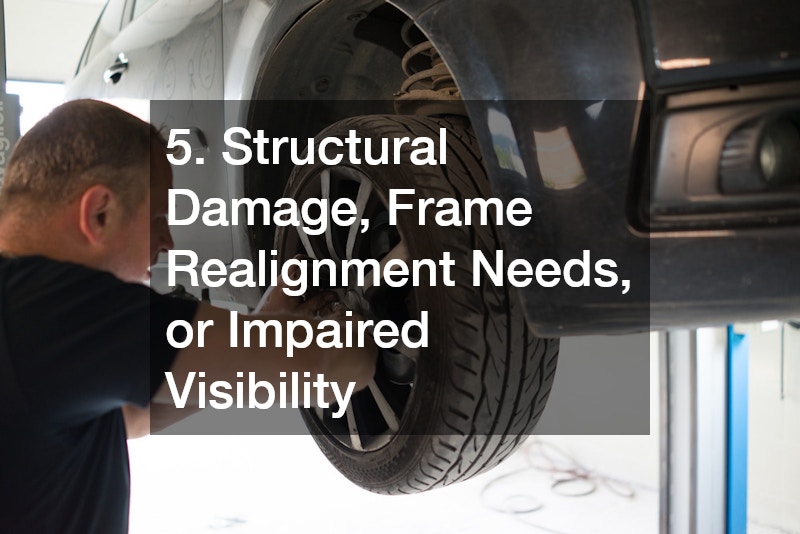
Automotive safety relies on structural integrity. When a vehicle is involved in an accident or if the glass components are compromised, the vehicle’s ability to protect its occupants during a subsequent collision drops drastically.
Actionable Tips for Drivers:
-
Utilize the quarter test for windshield damage: Place a quarter over any rock chip or crack. If the damage is larger than the coin or if it sits directly within the driver’s line of sight, the entire piece of glass must be replaced immediately to ensure safety.
-
Test all body latches after an impact: Even after a minor parking lot fender bender, verify that the hood, trunk, and all doors open and close smoothly. If a door sticks, the underlying frame or unibody structure has shifted.
A cracked windshield is more than an aesthetic eyesore; it compromises the structural strength of the vehicle’s roof. In a rollover accident, the windshield provides vital structural support. Seeking prompt auto glass services prevents a small chip from spiderwebbing across the entire glass panel due to temperature fluctuations. Similarly, hidden structural damage beneath plastic bumper covers can prevent your vehicle’s crumple zones from absorbing impact energy correctly in the future. Bringing your vehicle to a certified auto body shop after any collision ensures that the frame is digitally measured, underlying structural components are welded back to factory tolerances, and safety sensors are fully recalibrated.
6. Harsh Vibrations, Shuddering, or Erratic Clunking Sounds
A smooth ride is a sign of a well-balanced mechanical system. When your car begins to shake, shudder, or emit rhythmic clunking noises, it means components that are supposed to spin smoothly are meeting violent resistance.
Actionable Tips for Drivers:
-
Isolate the vibration source: Pay close attention to where you feel the shaking. If the vibration is isolated to the steering wheel, the issue lies in the front suspension. If you feel it through your seat, the problem is centered in the rear drivetrain, tires, or brakes.
-
Check wheel lug nuts manually: Before driving anywhere, after a sudden, severe wheel vibration begins, use your tire iron to ensure your lug nuts haven’t vibrated loose. Loose wheels can shear off the vehicle entirely while driving.
Suspension and drivetrain vibrations are progressive problems. A worn ball joint or control arm bushing alters the angle at which the tire meets the road, creating a chain reaction that ruins your tires, destroys wheel bearings, and compromises your ability to steer during an emergency maneuver. Having these symptoms evaluated by a professional prevents a localized part failure from damaging the entire drivetrain.
7. Electrical Gremlins, Weak Cranking, or Battery Corrosion
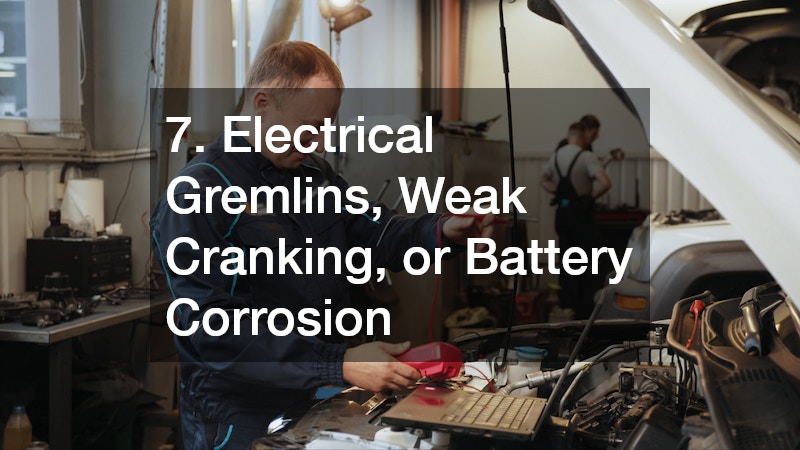
Modern cars are driven by computers. When the electrical foundation of your vehicle begins to degrade, it can trigger a confusing array of seemingly unrelated symptoms, from erratic power window behavior to sudden engine stalling.
Actionable Tips for Drivers:
-
Inspect battery terminals for oxidation: Look for a crusty white, blue, or green powdery substance accumulating around your battery terminals. This corrosion creates high electrical resistance, preventing your alternator from properly charging the battery.
-
Perform a voltage drop test: If you own a digital multimeter, measure the battery voltage while the engine is turned off. A healthy battery should read 12.6 volts. Start the engine; the voltage should jump to roughly 14.2 volts. If it stays low, your alternator is failing.
Common Signs of Electrical Distress:
-
The starter motor cranks sluggishly or emits a rapid clicking sound when you turn the key.
-
The interior cabin lights or headlights dim noticeably when you press the power window switches or turn on the climate control.
-
Random dashboard warning icons illuminate and disappear without a clear mechanical cause.
Electrical issues are notoriously difficult to track down without specialized wiring diagrams and computerized testing equipment. A weak battery forces your alternator to work overtime, overheating the charging system and causing premature alternator failure. Addressing electrical anomalies early keeps your vehicle’s complex network of modules communicating seamlessly.
Choosing the Right Specialist for Your Crisis
When your vehicle displays any of these severe warning signs, selecting the right professional to perform the repairs is critical. Navigating the automotive repair landscape can feel overwhelming, but keeping a few industry standards in mind will help you make an informed decision.
Always verify that the technicians working on your car hold up-to-date Automotive Service Excellence certifications. These credentials prove that the individual diagnosing your complex engine or electrical system has undergone rigorous training and passed standardized industry exams. Additionally, don’t be afraid to ask for your old, damaged parts back once the job is completed. Reputable service centers will gladly show you the worn-out components, pointing out the exact point of failure to provide transparency and peace of mind. Always request a written, itemized estimate before authorizing any teardown or repair labor, ensuring there are no surprise fees when it comes time to pick up your keys.
Conclusion
Your vehicle is a complex machine that relies on thousands of interconnected parts working in perfect harmony. It rarely fails without warning. Whether it is a subtle change in how the brake pedal feels, a strange aroma drifting through the climate control vents, or an amber dashboard icon flashing dynamically, your car is constantly broadcasting its mechanical health.
Ignoring these subtle warnings is a surefire path to dangerous highway breakdowns and exorbitant financial stress. Taking a proactive approach to automotive maintenance is the single best way to protect your investment and ensure your peace of mind. If your vehicle is currently exhibiting any of the red flags outlined in this guide, skip the endless internet forum searches. Pay close attention to what your car is trying to tell you, schedule a comprehensive inspection with a qualified professional, and keep your vehicle operating safely, smoothly, and reliably for the road ahead.