The trucking industry is a vital cog in the wheel of global logistics, and within it, the role of an end dump driver stands out for its unique responsibilities. An end dump driver operates a specialized truck designed to transport loose materials such as gravel, sand, fertilizer, or demolition waste. Each day, these drivers play an integral role in the construction and supply chain processes by efficiently moving materials from point A to point B.
Despite the demanding nature of the job, it offers a fulfilling career for those passionate about driving and logistics. This article explores the world of end dump drivers, diving into their daily tasks, challenges, and pathways to becoming one.
End dump drivers often start their day pre-dawn, reflecting the industry’s demanding schedule. They equip their trucks, conduct meticulous checks, and plan their routes, demonstrating high levels of responsibility and organizational skills. The end dump truck, named for its ability to unload materials from the rear, requires specialized handling and deep knowledge of vehicle mechanics. The profession demands significant dexterity and expertise to safely navigate roads, often under pressure to meet tight delivery schedules. This exploration not only highlights the mechanics of the job but also provides insights into the lifestyle and personal attributes that define a successful end dump driver.
While the role is laden with challenges such as unpredictable weather and road conditions, it also offers rewarding experiences. One is at the helm of a hefty machine, witnessing the transformation of landscapes as materials are delivered to their destinations. The job calls for a blend of technical skills and a strong understanding of logistics, making it suitable for individuals with a keen interest in mechanical operations and transportation networks. Moreover, the end dump industry serves as a backbone to various sectors, supporting everything from agriculture to construction with its sizable presence in the supply chain. As we embark on detailing a day in the life of these drivers, one can appreciate the pivotal role they play in keeping the wheels of industry turning.
What are the daily responsibilities of an end dump driver?
Loading and Unloading Materials
One of the primary responsibilities of an end dump driver is loading and unloading materials efficiently and safely. This involves meticulous coordination with site personnel and operators to ensure loads are placed accurately and securely in the trailer. Ensuring optimal weight distribution is crucial, as it affects the stability and maneuverability of the truck. Unloading requires skillful operation of hydraulic systems that tilt the trailer to deposit the contents at the destination. This process not only demands physical dexterity but also a keen awareness of safety measures to prevent accidents and ensure environmental compliance.
Often working in collaboration with heavy machinery operators, end dump drivers must possess excellent communication skills. They need to understand hand signals and verbal cues to align their vehicles accurately for loading and unloading tasks. The precision required in these activities cannot be overstated; even the slightest error could lead to spills, property damage, or environmental hazards. Moreover, drivers need to be vigilant about the types of materials they carry, as each can present unique challenges, such as dust control or weight limits. Ultimately, the efficiency with which loading and unloading are executed reflects directly on the driver’s professionalism and the client’s satisfaction.
To maximize each trip’s profitability, drivers often have to adapt to unforeseen challenges such as equipment malfunctions or site delays. Being proactive about maintenance and improvisation ensures that loading and unloading operations remain smooth under various conditions. Regular checks and balances, such as ensuring all load-related paperwork is accurately filled, contribute to a seamless workflow. This emphasizes the driver’s role not merely as a transporter but as a facilitator of the material supply chain, where punctuality and reliability are key. Each load carried and delivered epitomizes the driver’s expertise and commitment to maintaining the industry’s demanding standards.
What challenges do end dump drivers face?
Weather and Road Conditions
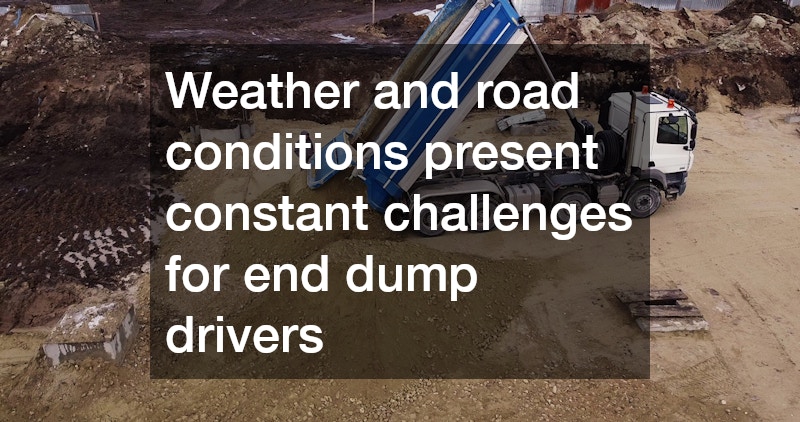
Weather and road conditions present constant challenges for end dump drivers, affecting loading, unloading, and the driving process. Inclement weather such as rain, snow, or fog can severely limit visibility and reduce traction, making navigation perilous. Drivers must adapt to these conditions, implementing defensive driving techniques to mitigate risks effectively. Some materials transported are sensitive to moisture, requiring extra caution during periods of wet weather to prevent damage and ensure load integrity. Seasonal changes often dictate operational strategies, necessitating flexibility and resilience in every aspect of a driver’s routine.
Various road conditions demand different levels of expertise and adaptivity from end dump drivers. Urban areas often present complex traffic patterns and infrastructure-related challenges, like low bridges or restricted zones. Conversely, rural routes can be unpredictable, with unpaved roads, steep grades, or wildlife crossings. Seasonal weather changes such as ice on roads add layers of complexity, compelling drivers to employ all available vehicle technology aids and personal intuition to maintain safety. Thus, end dump drivers are continually honing their skills to anticipate and respond to any road or weather condition dynamically.
Despite these challenges, end dump drivers are equipped with a strong focus on safety and prevention strategies, such as pre-route weather checks and dynamic driving practices. Furthermore, seasoned drivers develop a nuanced understanding of diverse road surfaces, enhancing their ability to navigate efficiently irrespective of terrain changes. Such experiences contribute significantly to the logistics industry’s safety record, ensuring timely and safe deliveries. Through strategic planning and dependable skills, drivers transform potential roadblocks into trivial hurdles, maintaining productivity and safety across every job they undertake. Their ability to courageously anticipate and navigate adverse conditions marks them as essential players in the industry.
A day in the life of an end dump driver is packed with responsibilities that demand skill, adaptability, and dedication. From maneuvering large vehicles and managing traffic conditions to ensuring meticulous loading and unloading operations, these drivers form the backbone of the supply chain. Despite challenges such as stringent timeframes, weather-related unpredictabilities, and safety regulations, their role remains indispensable. By committing to excellence and adhering to best practices, end dump drivers uphold the trucking industry’s standards, ensuring the timely and efficient movement of essential resources. Their invaluable contributions merit recognition, underscoring the importance of their role within the logistics chain.